
The .41 Magnum
The Right Idea at the Wrong Time

In the early 1960s, American law enforcement and handgun hunters found themselves caught between two powerful ideas and two very different cartridges.
On one end stood the .357 Magnum: fast, accurate, and proven, but increasingly viewed by some police trainers as marginal when loaded conservatively for duty use. On the other end loomed the .44 Magnum, spectacular in power and reputation, but far more revolver than most officers or even many shooters wanted to manage.
Between those two poles stood a practical question: Was there room for a true middle ground?
Out of that question came the .41 Magnum.
A Working Lawman’s Cartridge
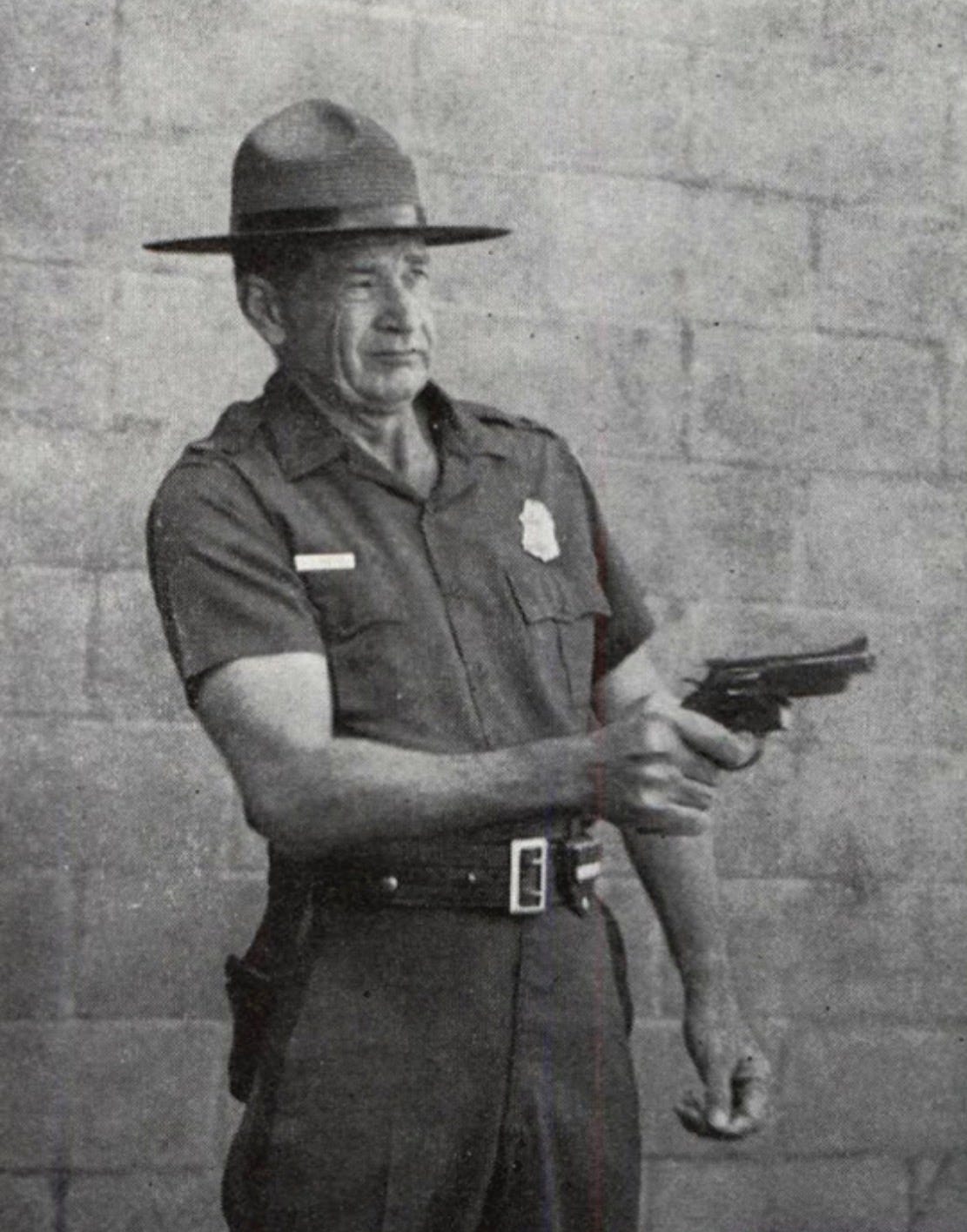
The .41 Magnum did not begin as a hunting round. It began as a law enforcement idea shaped by men who actually carried revolvers for a living.
Bill Jordan, along with Elmer Keith and Skeeter Skelton, believed that the ideal service revolver cartridge had yet to be built. Jordan in particular was concerned less with raw power than with controllability. A duty revolver, in his view, had to be shootable by the average patrolman in rapid double action fire, under stress, and with minimal training overhead.
Jordan’s proposed solution was elegantly simple: a .41 caliber bullet weighing roughly 200 grains at 900 to 1,000 feet per second. Such a load, he argued, would strike harder than the .357 without crossing into the recoil, blast, and overpenetration associated with the .44 Magnum.
It was never meant to be a magnum in the cinematic sense. It was meant to end fights efficiently.
When the Cartridge Arrived
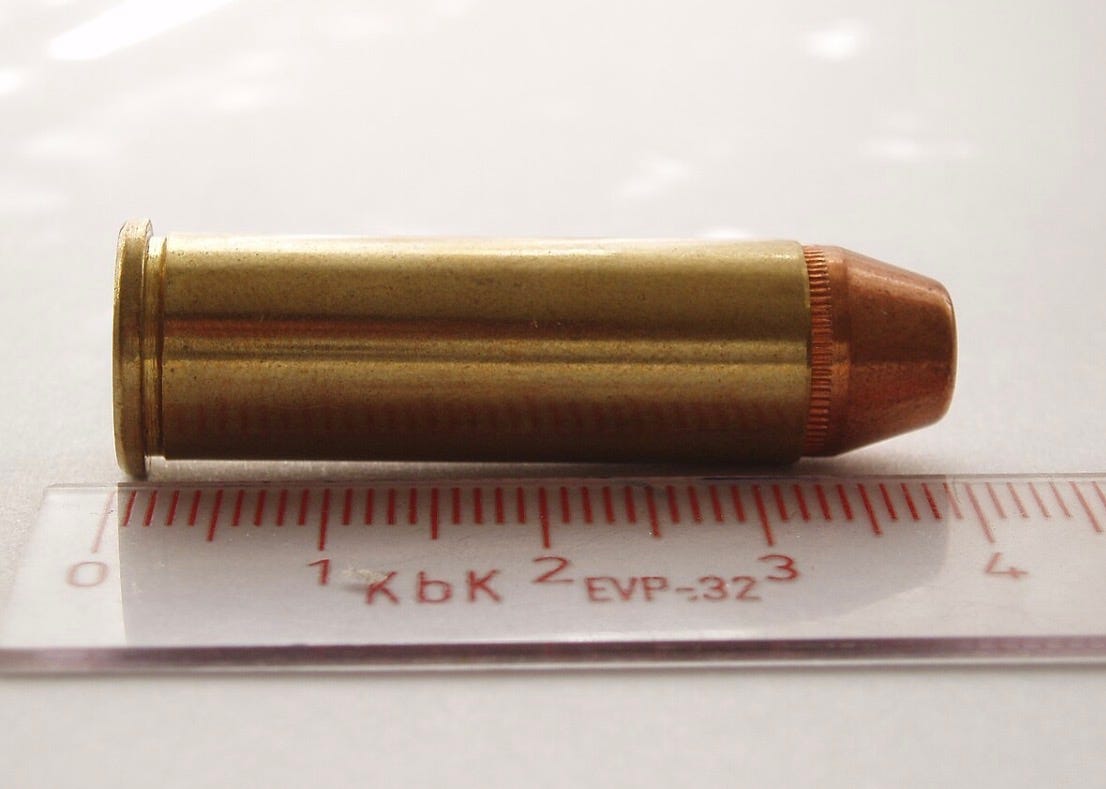
Remington introduced the .41 Remington Magnum in 1964, and on paper it looked impressive. The case was well proportioned, pressures were sensible, and accuracy potential was excellent. But the factory ammunition missed the heart of Jordan’s concept.
Two loads were offered, A 210 grain jacketed soft point at approximately 1,300–1,350 fps, and a 210 grain lead semi-wadcutter police load at roughly 1,150 fps
Even the reduced load exceeded the velocity window Jordan had advocated. Fired from duty length barrels, it produced sharp recoil and pronounced muzzle blast traits that ran counter to the cartridge’s original purpose.
The idea had survived. The implementation had not.
Smith & Wesson Commits Fully
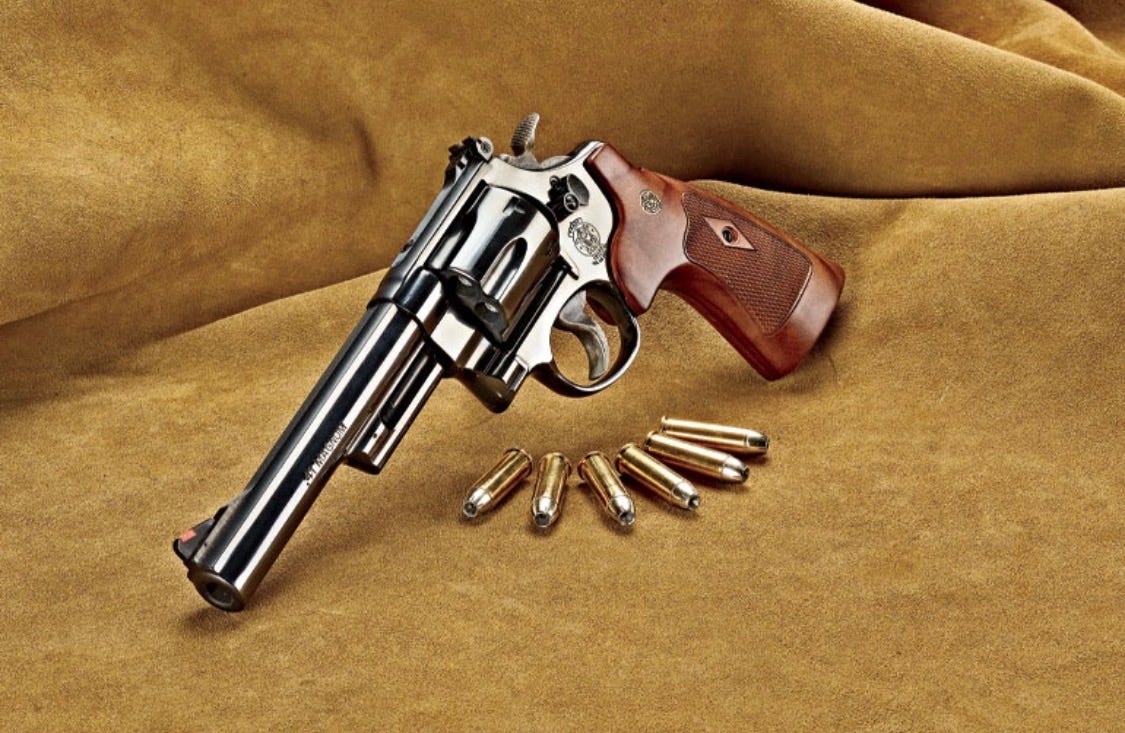
Smith & Wesson introduced two N-frame revolvers chambered in .41 Magnum, each reflecting a different interpretation of the cartridge’s role.
The Model 57 debuted with a 6-inch barrel, adjustable sights, and a high-polish finish. It was clearly aimed at sportsmen, offering excellent balance, a generous sight radius, and strong ballistic performance. An 8⅜-inch barrel followed shortly thereafter for handgun hunters seeking maximum velocity and reach.
The Model 58 told a very different story. It was introduced only with a 4 inch barrel, fixed sights, and a utilitarian matte blue finish. Everything about it signaled “duty revolver.” Unfortunately, pairing a 4 inch barrel with even the reduced .41 Magnum police load resulted in recoil and blast that many officers found difficult to manage.
Departments that tested the Model 58 often reported declining qualification scores. Training time increased. Ammunition costs rose. And all of it for a cartridge that had promised to simplify not complicate the service revolver equation.
A Path Law Enforcement Didn’t Take
Only a small number of agencies adopted the Model 58, and most abandoned it within a few years. The revolver itself was sound, accurate, and durable. What failed was the absence of a truly moderate factory load that matched the cartridge’s original purpose.
By the late 1960s, the window had already begun to close. The .357 Magnum remained entrenched, and the first serious moves toward high-capacity semi-automatics were on the horizon.
The .41 Magnum never got a second chance in uniform.
Becoming a Hunter’s Cartridge By Default
While the .41 Magnum struggled in police service, it quietly found its footing elsewhere.
With full-power loads, it proved to be an outstanding hunting cartridge. Compared to the .44 Magnum, it offered a flatter trajectory, slightly reduced recoil, and excellent penetration. In the Model 57 particularly with 6 inch and 8⅜ inch barrels, it delivered accuracy that rivaled anything in its class.
Those who spent real time behind the trigger often discovered something unexpected: the .41 Magnum was easier to shoot well than its reputation suggested. The recoil impulse was firm but linear, and the cartridge’s efficiency rewarded good fundamentals.
Where the .41 Truly Shines
The cartridge’s full potential ultimately revealed itself at the reloading bench.
Handloaders quickly learned that the .41 Magnum thrives in the very range Jordan had originally envisioned. Loaded with 200 to 210 grain bullets at 900 to 1,000 fps, it becomes controllable, accurate, and remarkably pleasant in well-balanced revolvers. Muzzle blast diminishes, follow-up shots improve, and the cartridge finally becomes what it was always meant to be.
At the upper end, the .41 remains fully capable. Heavy cast bullets at moderate velocities deliver deep, straight-line penetration suitable for serious game. What distinguishes the .41 is not excess, but balance.
Many experienced revolver shooters eventually come to the same conclusion: the .41 Magnum is not better than the .44, but it is often easier to live with.
Why the .41 Magnum Endures
The .41 Magnum occupies a quiet space in the revolver world. It does not chase trends. It does not appeal to beginners. It rewards understanding.
It survived because it works for its intended purpose exceptionally well and because those who discover it tend not to let it go.
Born from a practical lawman’s idea, shaped by imperfect execution, and redeemed by shooters who took the time to understand it, the .41 Magnum remains one of the finest examples of what a revolver cartridge can be when power is tempered by restraint.
Sometimes the best ideas arrive too early.
And sometimes, they wait patiently for the right hands.
While I respect your focus on wheelguns (I use them myself.), there is a parallel in the semi-auto world that saw a slightly better outcome. The 10mm Auto. Its making a comeback.
For LE use, the midbores (9mm) are better for general use; the balance between controllability, gun size and terminal performance is optimized.
Add another millimeter of bore diameter and raise MAP to 35-40K PSI and all 3 areas begin to have serious compromises. Ones hunters can deal with, but LEO agencies find challenging to manage.
The best workaround regarding largebores for an autopistol cartridge was introduced in 1905, the 45 ACP.
While I've never owned a .41 mag, the few people I know who have one love it.
In a similar concept, back when I owned several .44 magnums and shot them a lot, my handloads were all basically reduced power .44 special loads in a magnum case. Velocities around 1000 to 1100 fps were the magic zone where shooting was pleasant. So I guess in a sense, what handloaders did with the .41 I was already doing with the .44. And given that the .44 was actually a .429, I'm not sure there's any appreciable difference.
As for Bill Jordan's proposed ballistics, he basically just re-envisioned the 44-40 cartridge. He could have just had a new revolver rechambered in the 44-40 and called it a day.